
Crew favorite
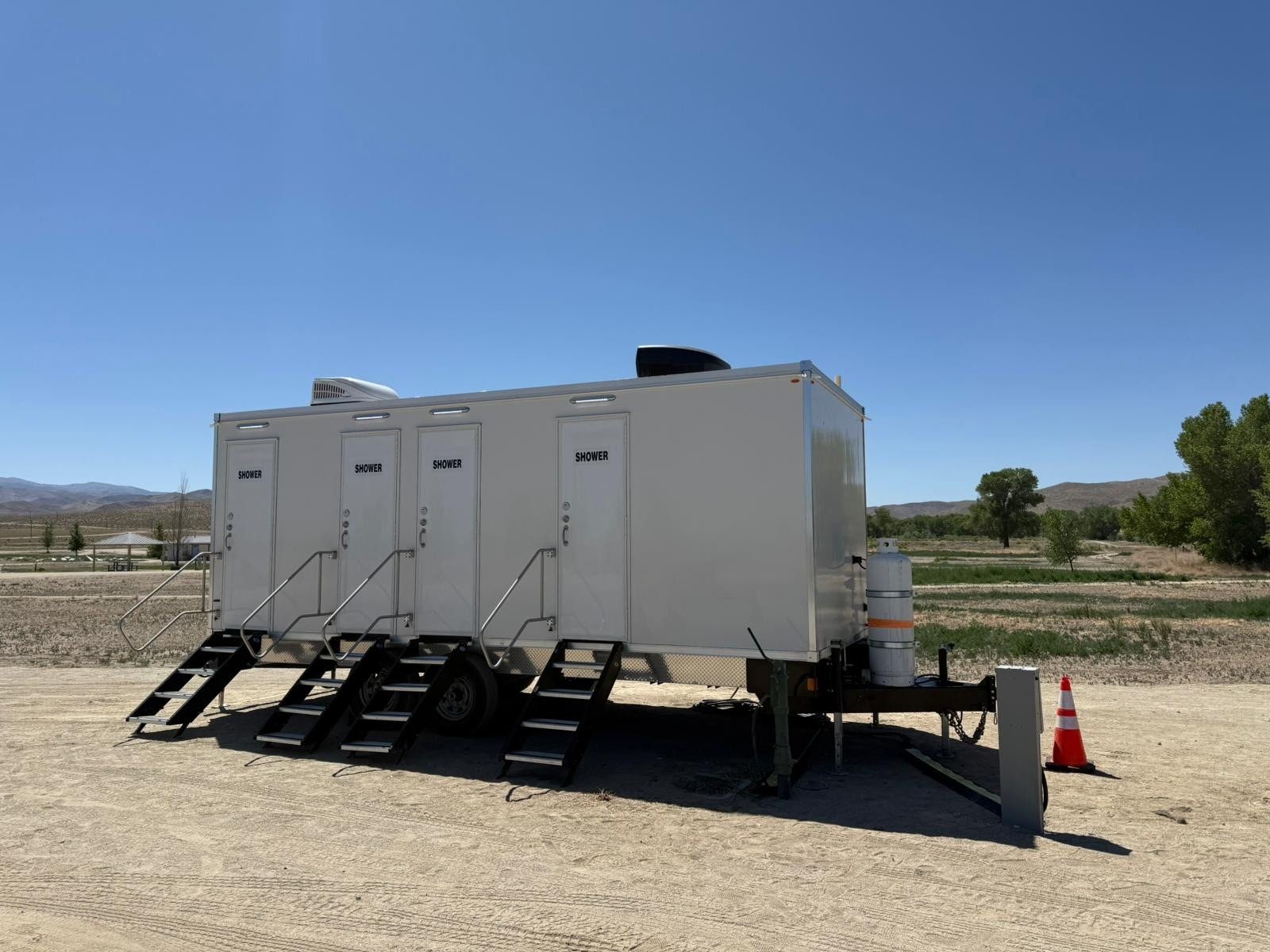
Multi stall shower trailer
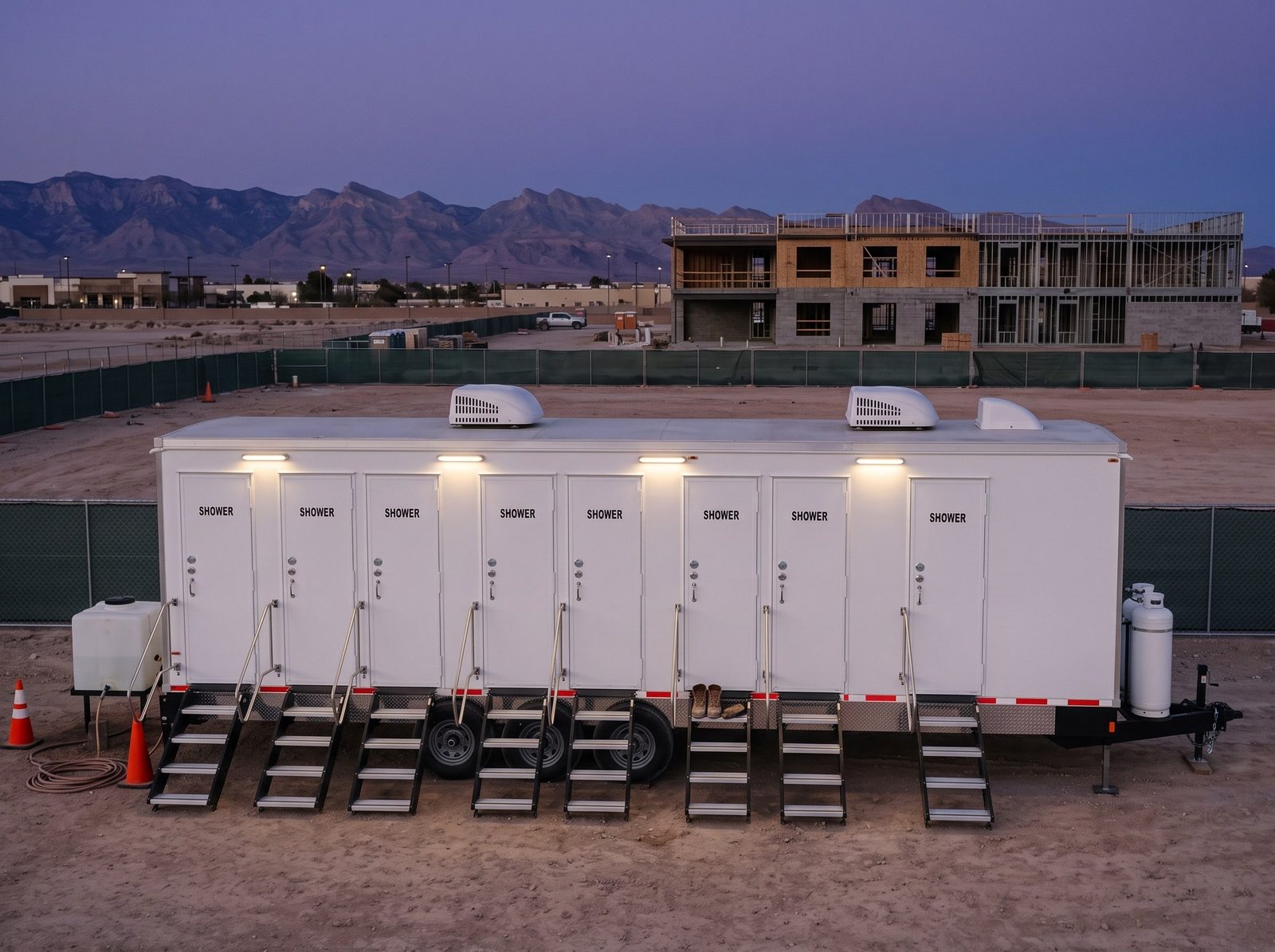
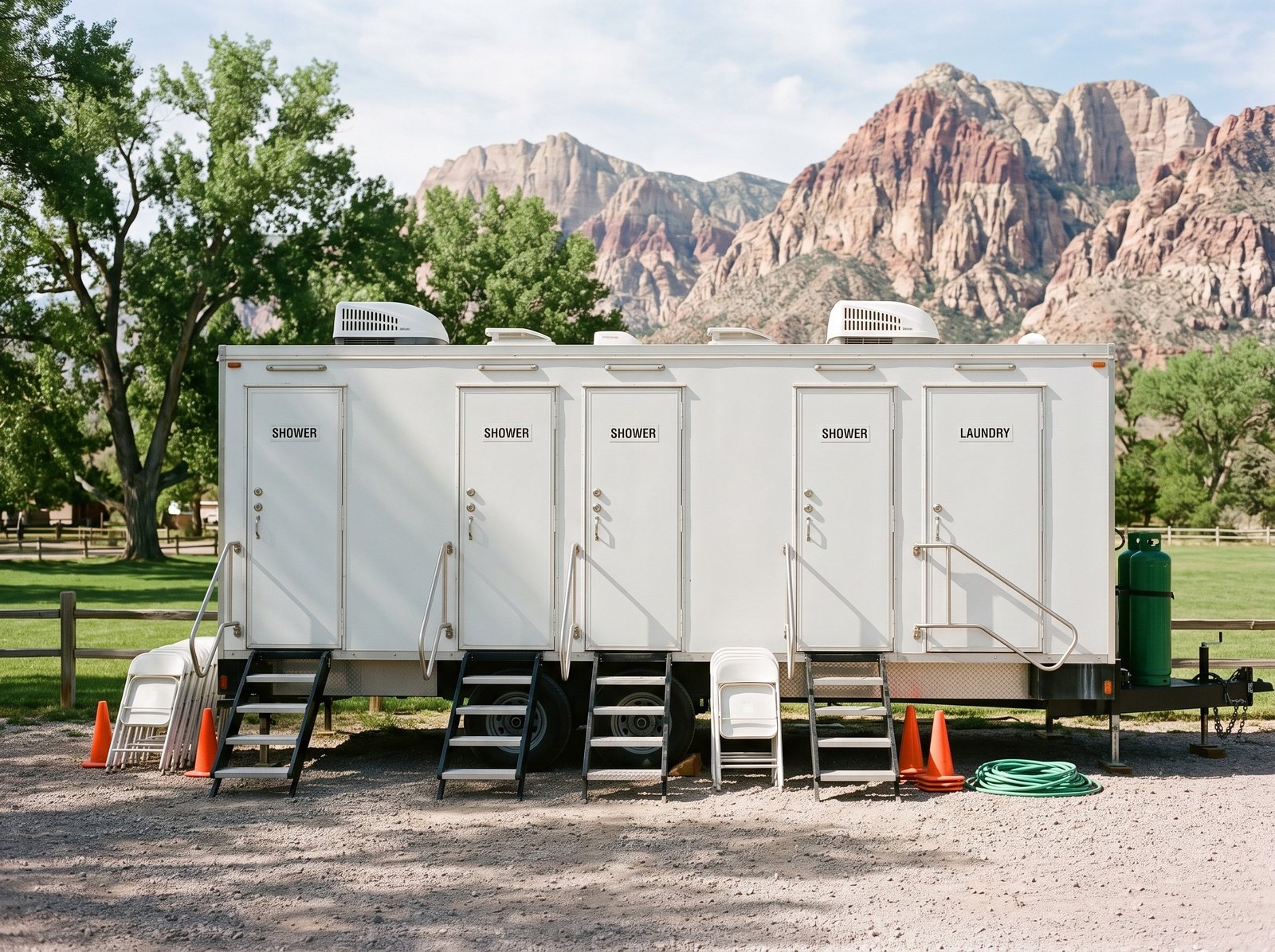
Four to eight private stalls with a dry changing area behind each door. Built for shift changes on resort remodels, warehouse pads and solar work.
Mobile shower trailer rentals
Summerlin, Henderson, North Las Vegas, the Strip corridor, and the rest of the state.
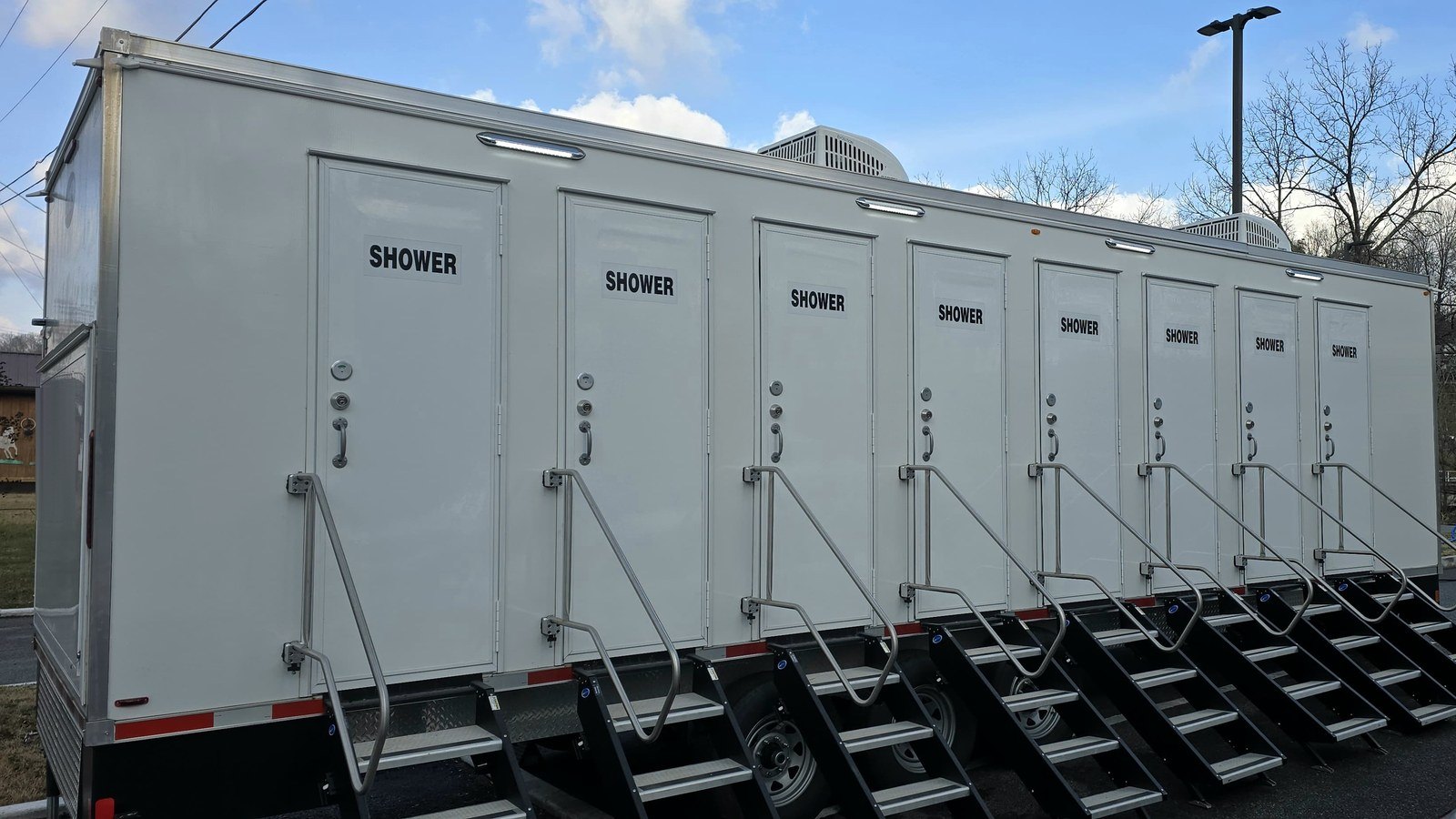
We drop clean, private shower trailers on valley jobsites, Strip-adjacent base camps, film lots, festival grounds and emergency staging areas. Real hot water on demand, air conditioning that holds up in August, and a crew that shows up when we said we would.
Tell us the site and the dates. We will tell you straight whether we can cover it.
A person answers. You are not filing a ticket.
Reviews around the valley
★★★★★We had forty framers on a Henderson site in July and nowhere for them to rinse off before the drive home. The trailer showed up leveled and cold inside, and the crew used it every single day.
★★★★★Two day festival, vendors on site from five in the morning. Hot water held through the evening rush and the service truck came in overnight like they said it would.
★★★★★Called on a Sunday night about a crew starting Monday. A real person answered, and the unit was on our pad in North Las Vegas by Tuesday morning.
Who calls us
The valley runs on temporary everything. Resort remodels in Summerlin, warehouse pads in North Las Vegas, festival grounds in Henderson, film lots off the Strip. Showers are the piece people forget until somebody has been on site four days straight.
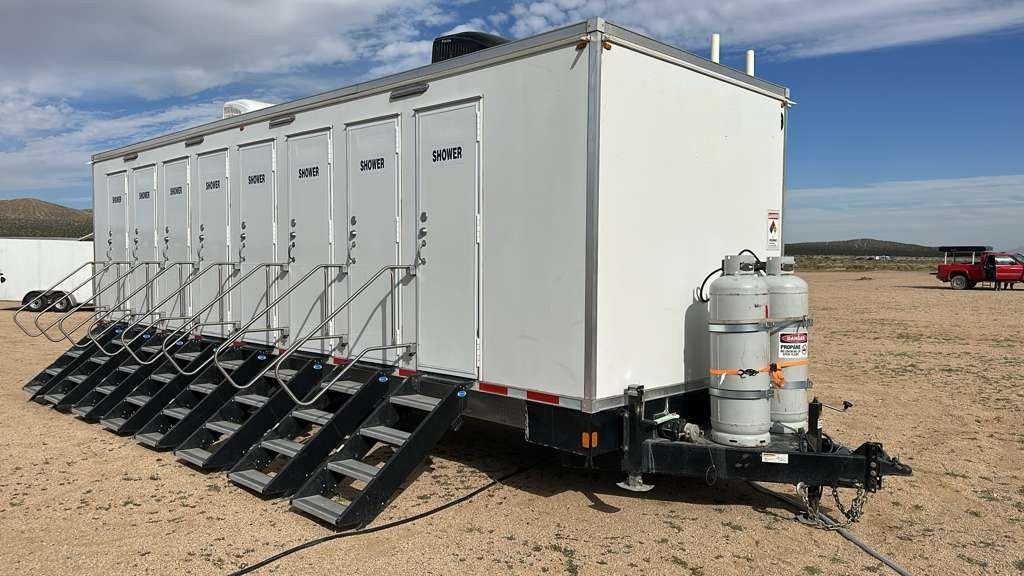
Resort remodels, warehouse pads, solar and transmission work in open desert. Long shifts, dust, heat, and nowhere to rinse off before the drive home.
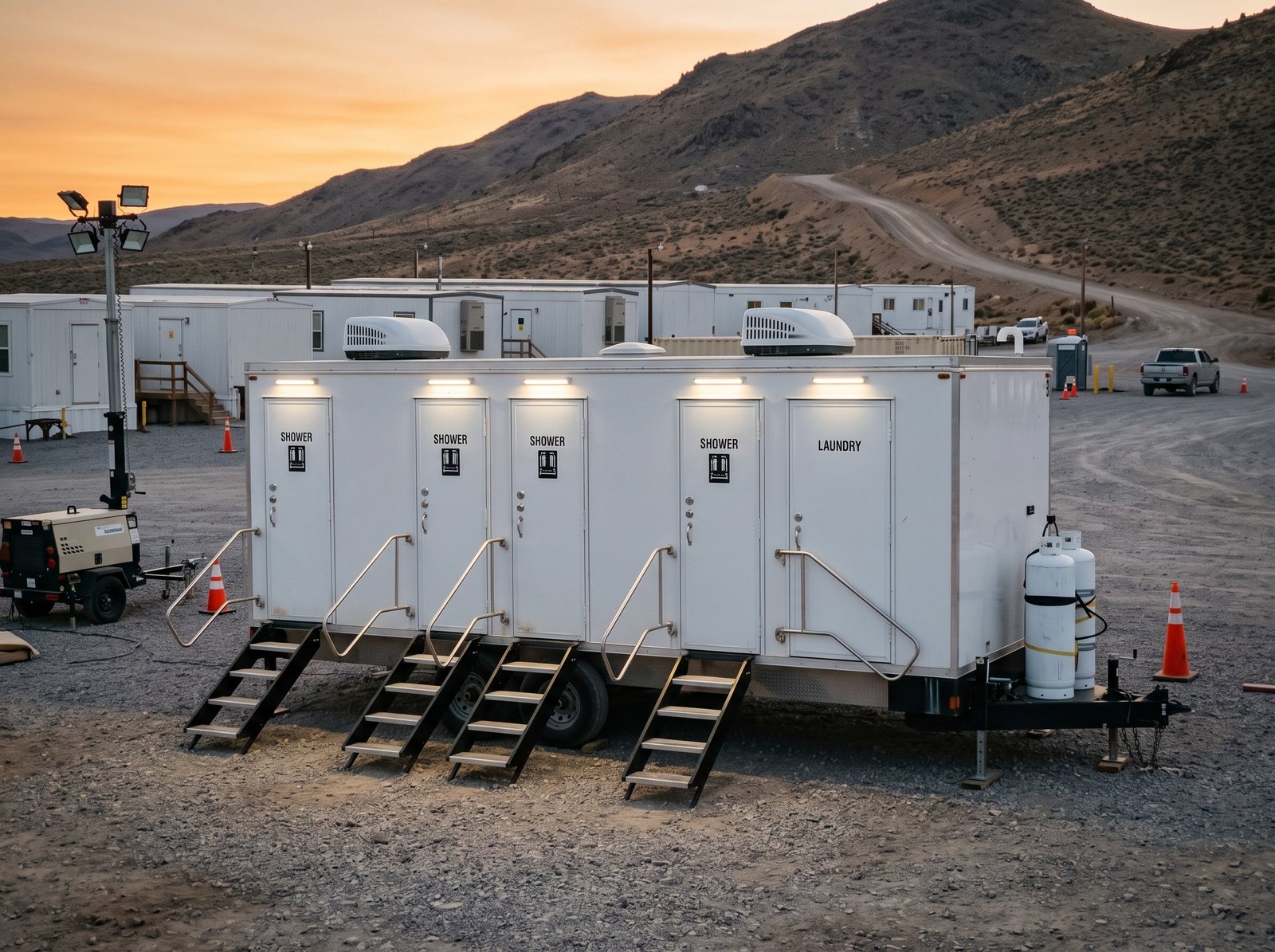
Camps where the nearest motel is an hour each way. We set the trailer at camp and keep it serviced through the rotation.
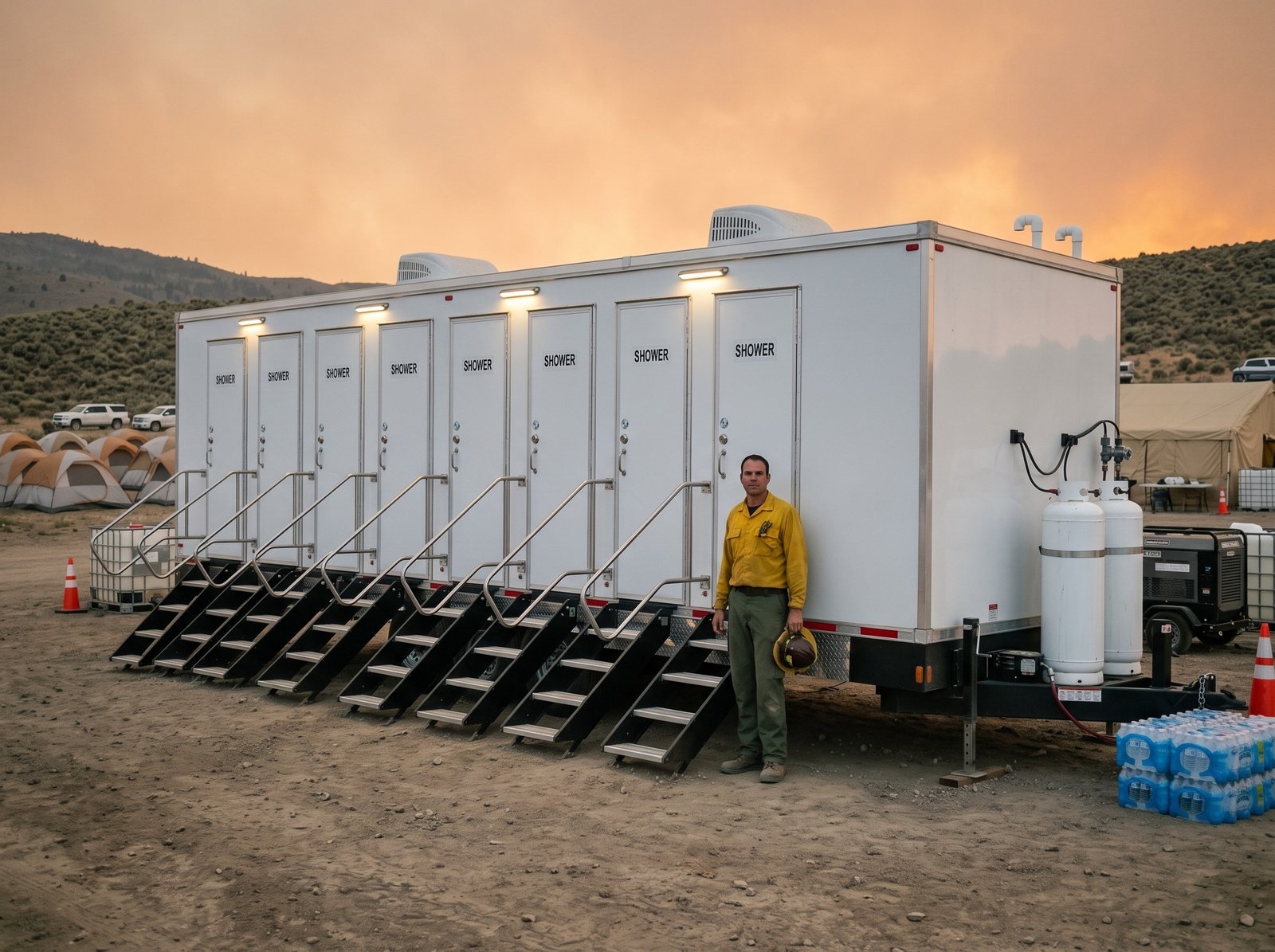
Flash flood cleanup, outages, wildfire crews staging anywhere in the state. We can stand up a shower line and hold it as long as the operation lasts.
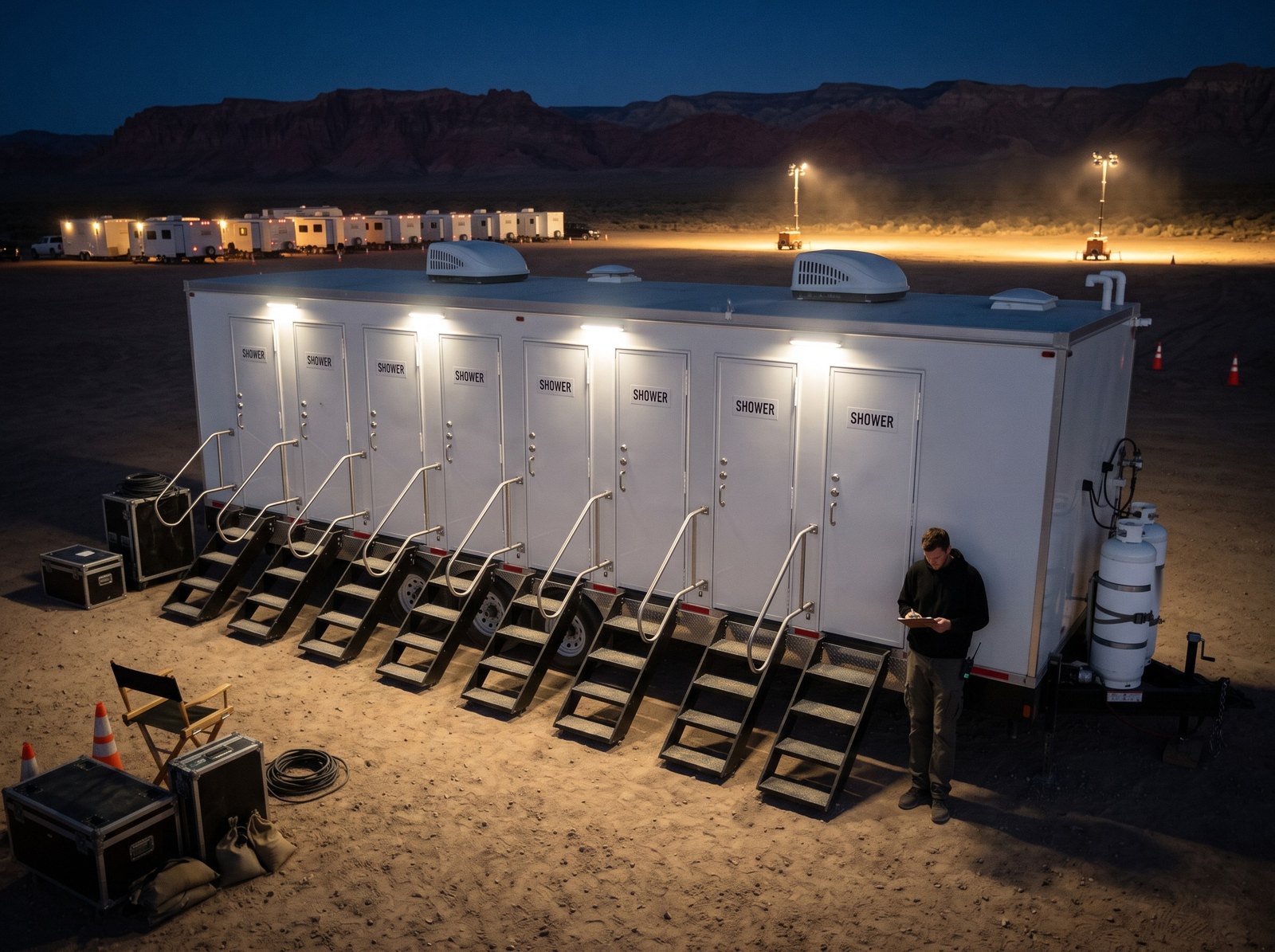
Talent and crew on a desert shoot want somewhere decent to clean up between setups. The trailers are quiet, lit properly, and look right in a base camp lineup.
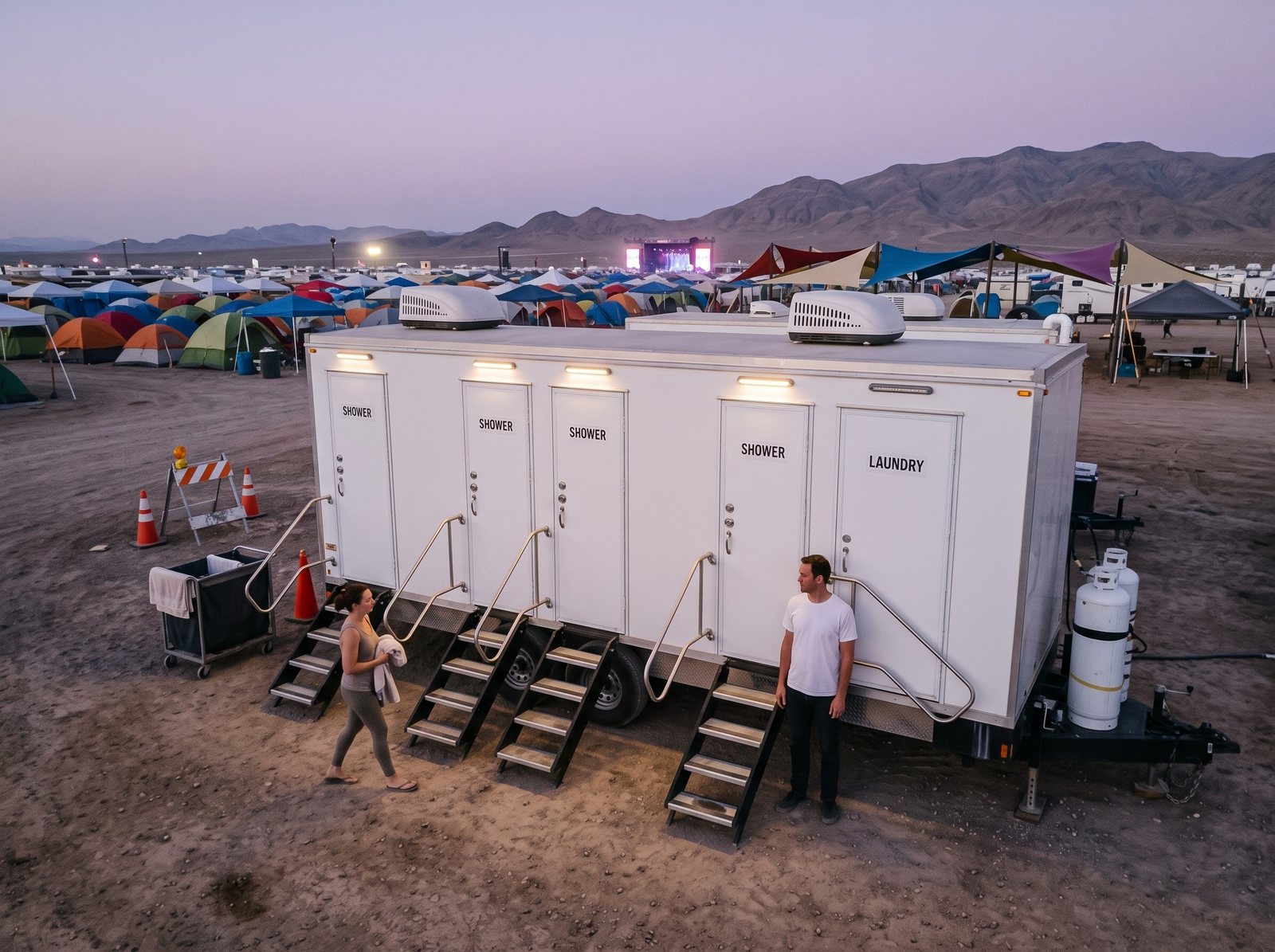
Multi day music events, motorsports, off road racing and rally camps. Guests and staff both get a private stall instead of a garden hose behind a tent.
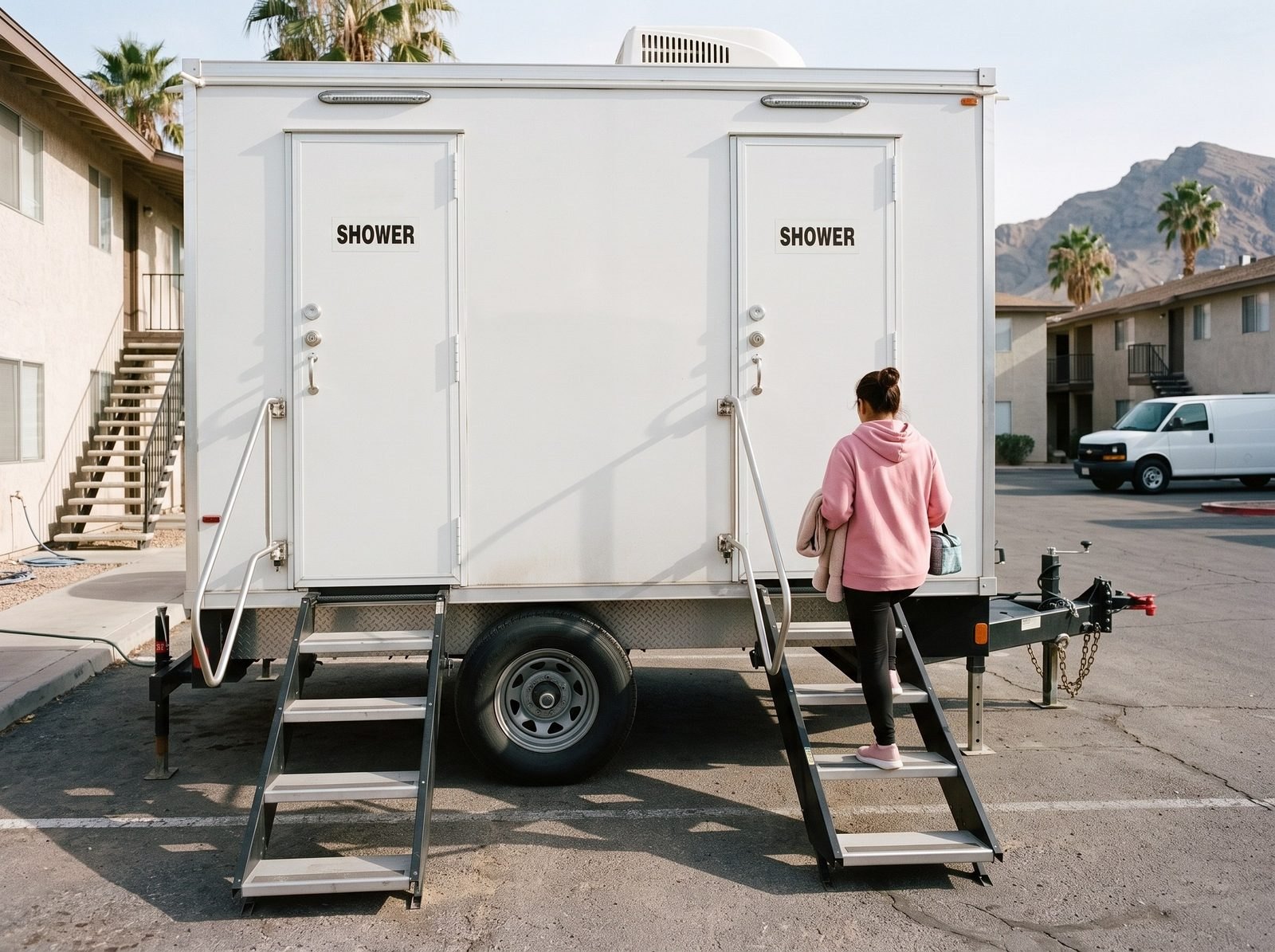
Schools, gyms, apartment complexes and care facilities that lose hot water during a renovation. Tournaments, ranch weddings and remote crew housing too.
The through line in all of it is that Nevada puts people to work on ground that has nothing on it. A data center campus on newly graded land at the edge of a valley. A distribution building going up on raw desert at the north end of town. A highway crew working nights along a corridor that moves a few hundred yards every month. A race support zone on a dry lake bed where the nearest permanent structure is a long way behind you. In every one of those, the workforce arrives before the plumbing does, and frequently the plumbing never arrives at all because the job finishes first.
So the request is usually showers rather than just toilets. The sanitation rules that cover construction work set out toilets and genuine handwashing scaled to crew size, and they treat a facility that takes more than about ten minutes to reach as not really available. Showers are not mandated in most cases. Contractors bring them anyway. Anybody who has worked a summer here knows why: a twelve hour shift on an open pad in July is physically dangerous, and being able to rinse off and cool down is a safety tool before it is a comfort. The retention argument follows close behind. A crew that can get clean before the drive home is a crew that comes back next week.
Events run the same logic in compressed form. The people who need the showers at a festival are rarely the ticket holders. They are the production staff, vendors and stage crews who arrived days before the gates opened and will still be there after they close, working overnight in desert heat with a load in schedule that does not care what time it is.
The equipment
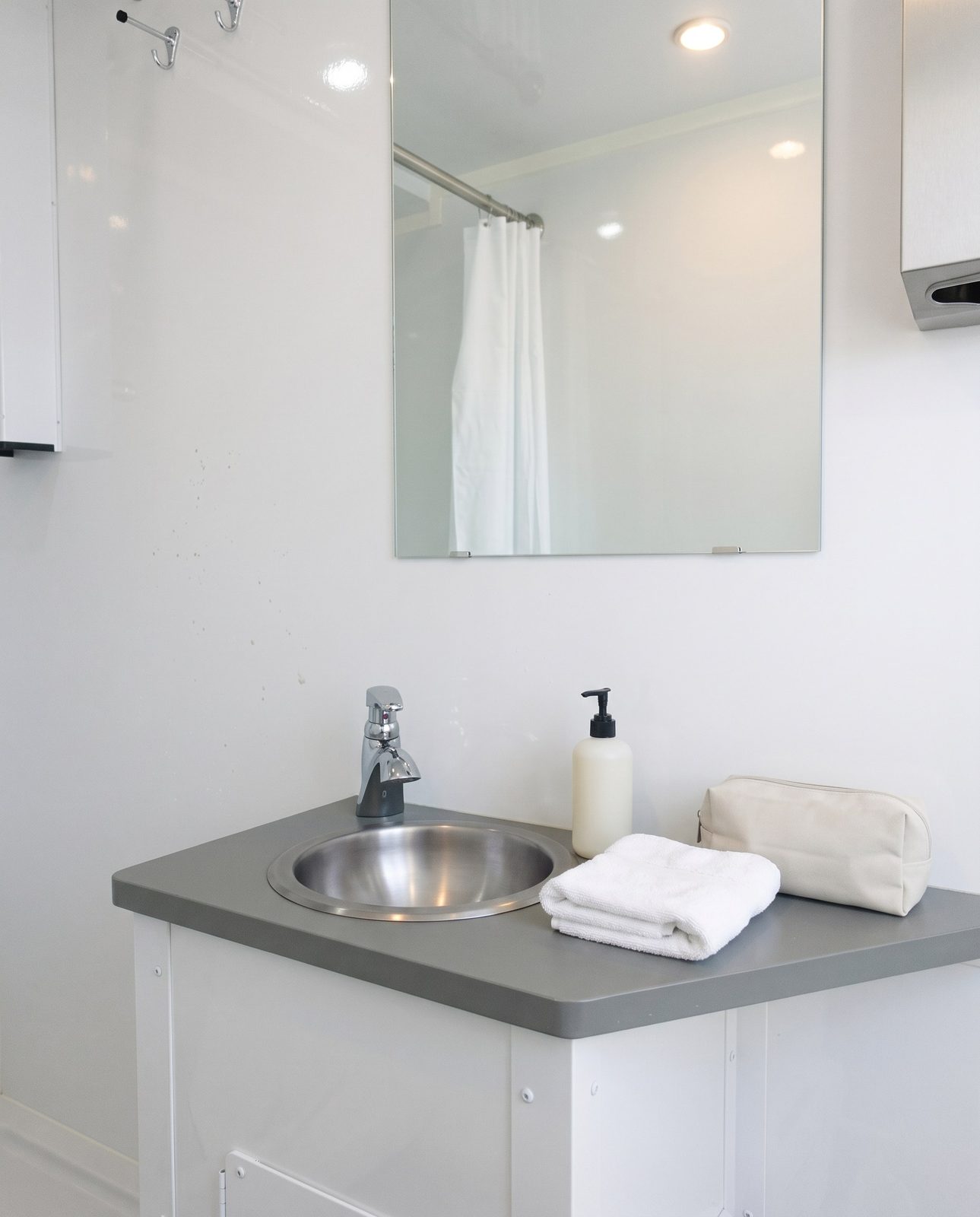
These are luxury mobile shower trailers, not a converted box with a spigot. Every unit gets checked in our yard before it leaves, and we walk you through the layout at delivery.
The working year
Planning equipment here means planning around three overlapping calendars, and none of them is the one on the wall.
The first is heat. From June into September the valley floor sits above a hundred degrees through the afternoon, with stretches that push past a hundred and ten more than once a season. Humidity stays low, which helps a little, and does nothing at all for somebody standing on asphalt at two in the afternoon. For a trailer, that heat is an engineering problem. Not a weather report. The air conditioning has to be specified for continuous duty at that ambient temperature and the generator has to carry it, because a compressor rated on a mild morning will disappoint everyone by the second week of July. Placement helps more than people expect. Shade if the site has any, and if it does not, an orientation that puts the trailer's own body between the sun and the door side.
The second is the monsoon. From about the middle of July into September, moisture pushes up from the south and produces short, violent storms. Half an inch of rain in twenty minutes is not unusual. And it is enough to fill a wash that was bone dry that morning or to turn the low corner of a lot into standing water. Ahead of those storms come the dust walls, which drop visibility to nothing for a few minutes and coat everything they pass in fine grit: intake vents, condenser fins, vanity surfaces, all of it. Units working through those weeks get their filters and vents checked more often, and a pad gets picked for where the water goes as well as for how flat it looks.
The third calendar is human. Convention weeks and the big race weekends move the entire valley at once. Traffic gets heavy, rooms disappear, dock windows tighten, and equipment that was free on Monday is spoken for by Wednesday. None of that is a reason to avoid those weeks. But it is a reason to call earlier than you otherwise would. On those dates the difference between an early call and a late one is which unit you get, not whether you get one.
Winter in the valley is mild by comparison. Overnight lows sit in the high thirties and forties, hard freezes are uncommon on the valley floor, and freeze protection is available rather than automatic. Go north or gain elevation and that flips completely, which is covered properly on where we deliver.
Summer on the crew side
The equipment side of the heat is covered above. This is the other half: how a site actually uses a shower trailer when the valley floor sits at 110 degrees at three in the afternoon, and what we change on our end between June and September.
The trailer earns its keep when it sits beside the shade structure and the water cooler, not at the far corner of the lot where the delivery truck happened to find room. A crew coming off a pour will not walk four hundred feet across hot asphalt to rinse off. Tell us where people take their breaks and we will set the door side facing that way, with the trailer's own body blocking the afternoon sun.
Heat stress is a recognized workplace hazard, and the NIOSH guidance on heat stress and workers puts the job of reducing it on the employer through engineering and work practice controls. Plenty of the superintendents we work with in Henderson and North Las Vegas count a cool rinse at lunch and at the end of the shift as one of those practices, next to water, shade and earlier start times.
From June on, a lot of concrete and roofing work in the valley starts at two or three in the morning to finish before the worst of the heat. That flips the busy hour. The crush at the stalls lands at nine or ten in the morning instead of the evening, which is exactly when a service truck would normally come by. We move the service visit to the late afternoon or the middle of the night so it never lands on top of the rush.
Every summer service visit includes the condenser fins and filters, because dust and heat together are what make an air conditioner quit. Generator fuel gets topped off on every visit instead of when the gauge looks low, since a unit running its air conditioning flat out through an afternoon burns a tank far faster than the same unit in April. Fresh water sitting in open sun also runs warm, which crews notice on the cold side of the tap, so shade and a steady refill schedule both help. If the unit is headed for a pad with no shade at all, like the new industrial parcels out at Apex, say so on the call and it goes out set up for that. Stall counts and unit sizes for a summer job are on what we rent.
On the ground
A paved lot behind a resort and a graded pad ninety minutes from pavement need different plans. We run both.
The difference between those two placements is not the trailer, it is everything around it. On a paved lot behind a resort on Las Vegas Boulevard, water and power are usually within reach and the pavement already carries the weight. The yard is close enough that a service truck can come back on short notice. What slows the job down is people, not ground: a dock window, a badge, an escort. And a noise limit, because guests are sleeping on the other side of the wall.
Ninety minutes out on a graded pad, every one of those assumptions goes away. The unit carries its own water and waste tanks and runs off the generator. The drive sets the service interval, and on a pad ninety minutes out every visit is a three hour round trip before any work gets done. What the site gains in space it loses in flexibility, and the plan has to be right before the truck leaves rather than adjusted afterward.
Valley coverage
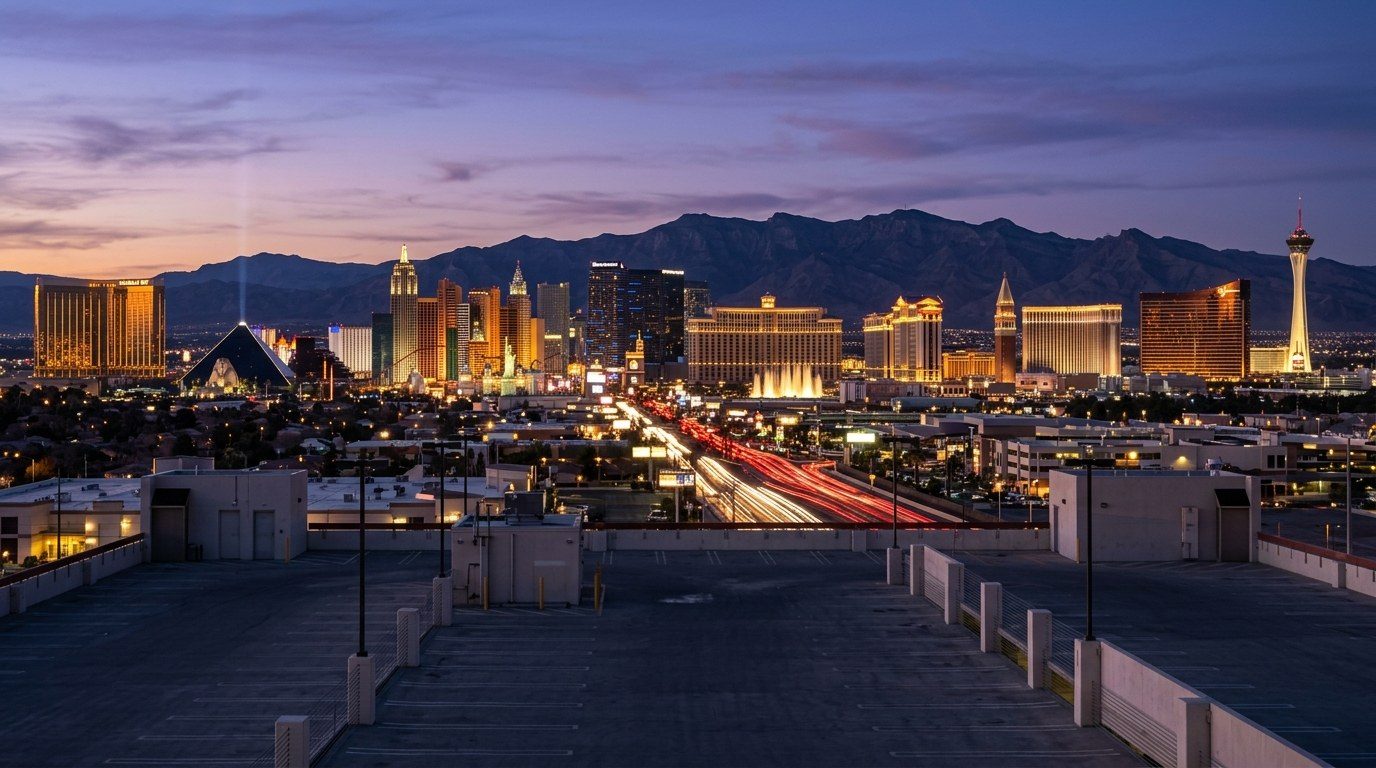
If you live or work in the Las Vegas valley, this page is for you. We stage out of the valley and run short hauls to the neighborhoods locals actually name, plus the towns past the beltway when the job needs it.
Inside the valley, distance is rarely what decides a delivery. The ground is flat, the roads are good and most placements are a short haul. What actually decides it is the gate: what hours it is genuinely open rather than officially open, whether a badge or an escort is involved, whether a dock window applies, and whether the event filling the arterials this week adds an hour to the run. Give us the window and the run gets built around it.
Terrain does change once you leave the middle of it. West of town the ground climbs quickly into rock and canyon country, which is a filming draw and a reminder that a site twenty minutes from a paved arterial can be a completely different surface. East and south toward the far side of the valley the ground turns rockier as it approaches the higher desert. And north, at the industrial edge, there are parcels with real projects and real headcounts where utility service is still being built out alongside the buildings, so hauled water and generator power is the normal arrangement rather than the exception.
Las Vegas valley coverage sketch. We also haul north to Reno and Sparks and out to Pahrump, Beatty and the rest of Nevada when the schedule fits. Full delivery notes by region.
How a rental runs
Four steps, none of them a surprise. We would rather over explain on the phone than have a driver arrive at a gate nobody told us about.
Underneath those four steps the principle is the same one the whole operation runs on: settle it on the phone rather than on the pad. Nearly everything that goes wrong on a rental was decided before the trailer moved, and it is almost always one of four things. A spot described as level that is not. Overhead clearance nobody looked up at. A headcount that turns out to be optimistic once the job starts. Or equipment sized off the wrong forecast, which in the south means a generator chosen on a mild morning and in the north means a unit set out in autumn with no freeze protection because it was still warm at noon.
How many people, how many days, how often they shower. That is most of the math. We will say so if the honest answer is that you need less than you asked for.
Our driver places the trailer, levels it, connects to whatever you have on site, and tests every stall before leaving. Access, gate hours and hookups get confirmed ahead of time.
On longer rentals we come back on a set schedule to pump waste, refill fresh water, restock and clean. On live events we work inside your quiet windows.
Call it and we pull the trailer and leave the pad the way we found it. Extending is usually no problem if the schedule moved on you.
Once it is placed
Most of a rental happens after delivery day, and it is quieter than people expect. The trailer sits where it was leveled, the crew uses it at whatever hour suits them, and we come back on an agreed interval to do the same list every time: pump the waste, refill the fresh water, clean the interior properly, restock, run the drains and check the fixtures. In the dusty months the vents and condenser get attention on that same visit. Through a northern winter the freeze protection gets checked rather than assumed.
The interval itself is built from your job rather than from a template. Two things set it. The first is how fast the tanks actually move, which comes from how many people genuinely use the unit and whether they arrive spread across a shift change or all at once. The second is how far away you are, because a placement inside the valley sits on a tight loop and can be seen at short notice, while a placement several hours out gets water and waste handled in one visit on a fixed schedule.
On a live event the whole thing inverts. Usage is concentrated rather than steady, so servicing happens during the run instead of around it, inside whatever quiet window the schedule allows: overnight, between sessions, before gates. Trying to get a service truck across a festival ground in the middle of the afternoon is not an experiment worth repeating.
What changes an interval mid job is nearly always headcount. Crews ramp through a build phase. Event staffing climbs for days before the public shows up. A tank sized for the first week behaves differently in the third, and the fix is a phone call and a tighter schedule. Same with the other ordinary changes: extending the rental, adding a second unit, moving it as the work shifts down a corridor, or bringing the pickup forward because the job finished early. None of those are a process.
Trailers we offer
Private stalls, on-demand hot water, and climate control in every unit. Pick the stall count that matches your crew or guest load. ADA options are available when your dates need one.
Stall count is the first decision and the rest follows from it. A bigger trailer carries more fresh water and more waste capacity, which changes how often somebody has to come back, and it draws more power, which changes the generator. So the useful question on the phone is not which trailer you want, it is how many people will genuinely shower and whether they arrive together or in a trickle. The busiest twenty minutes of the day sizes the unit.
Crew favorite
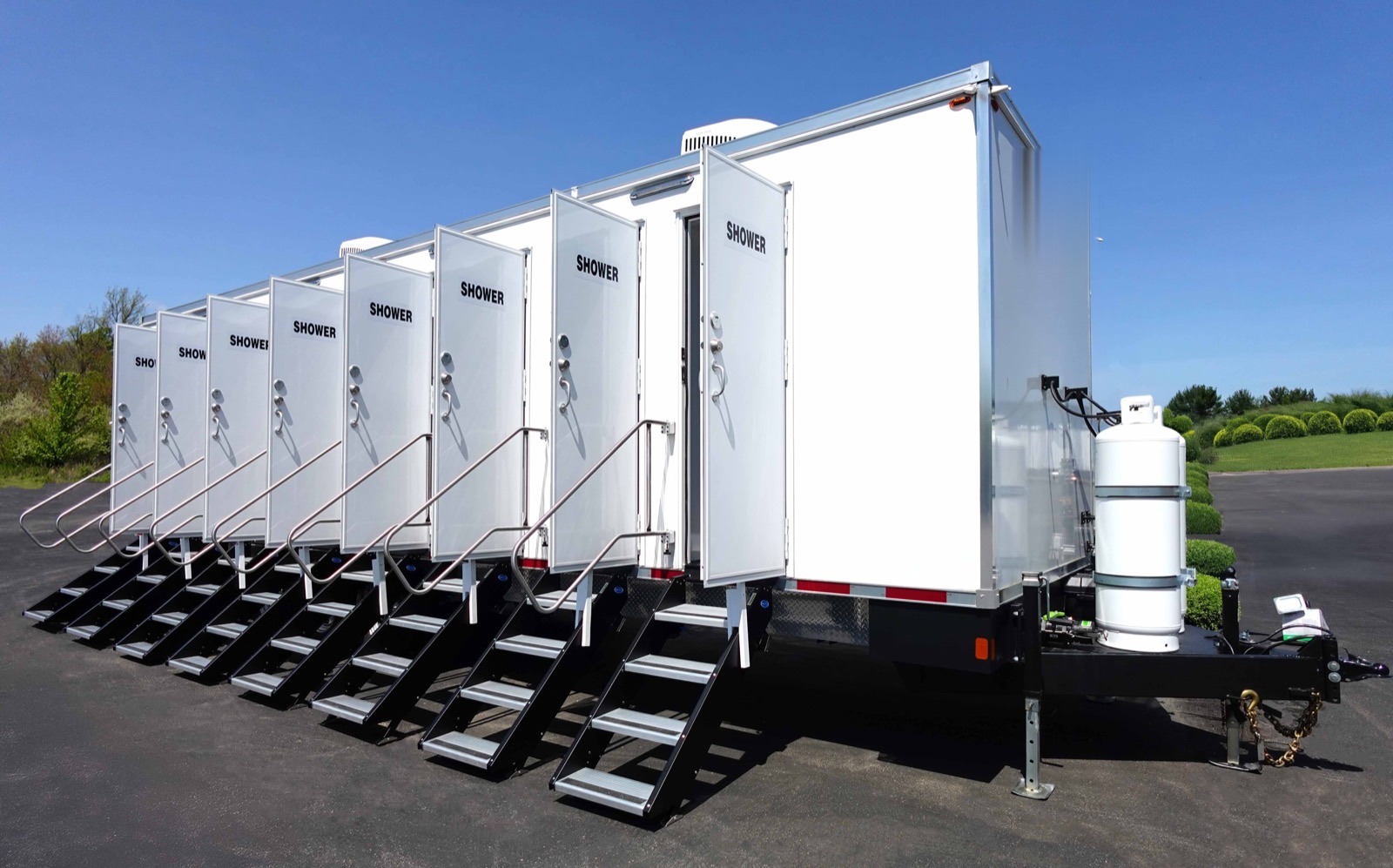
Four to eight private stalls with a dry changing area behind each door. Built for shift changes on resort remodels, warehouse pads and solar work.
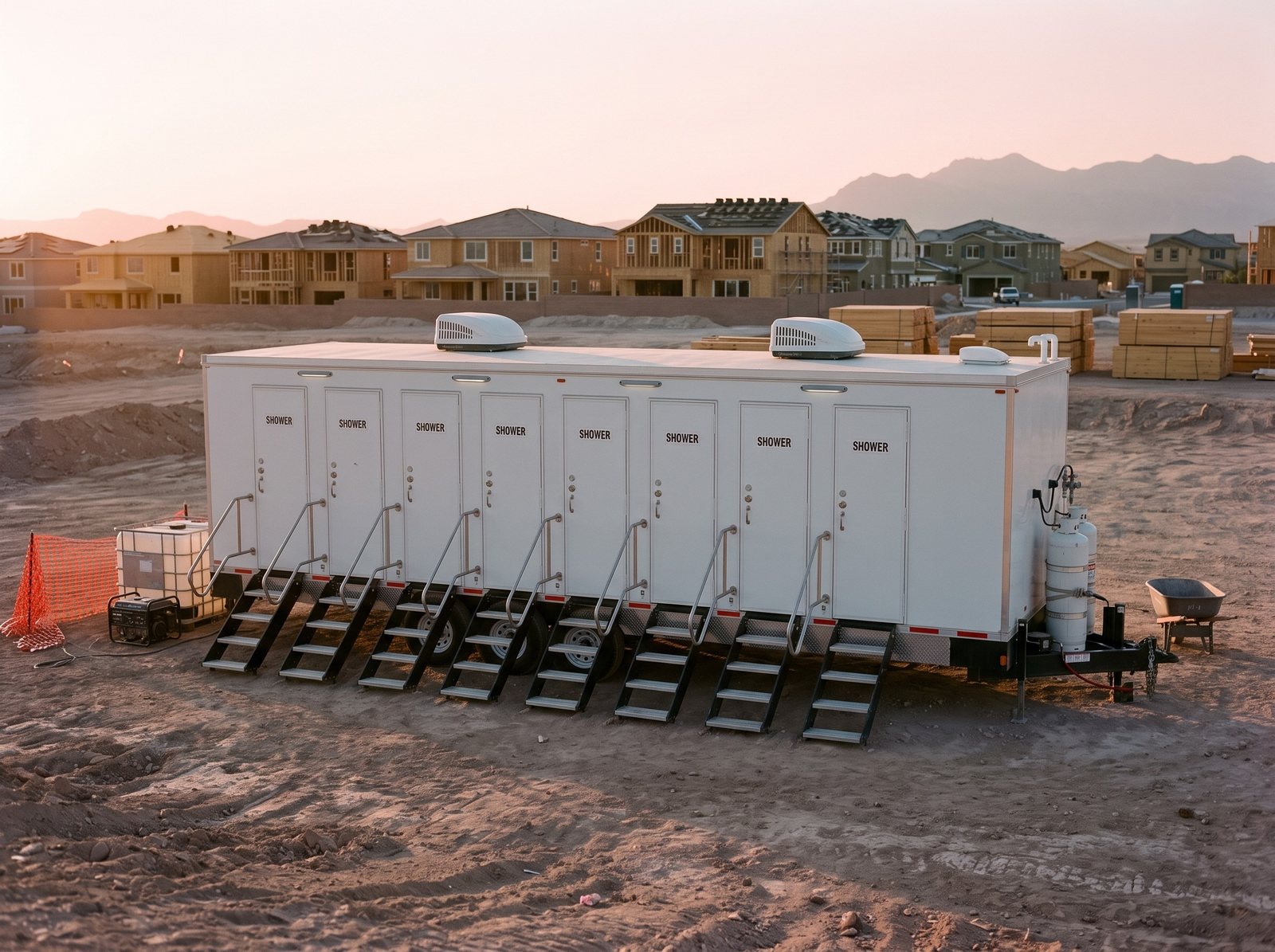
High headcount
When a big crew hits the trailer at once, more doors keep the line moving. Roof air conditioning for July heat on open pads.
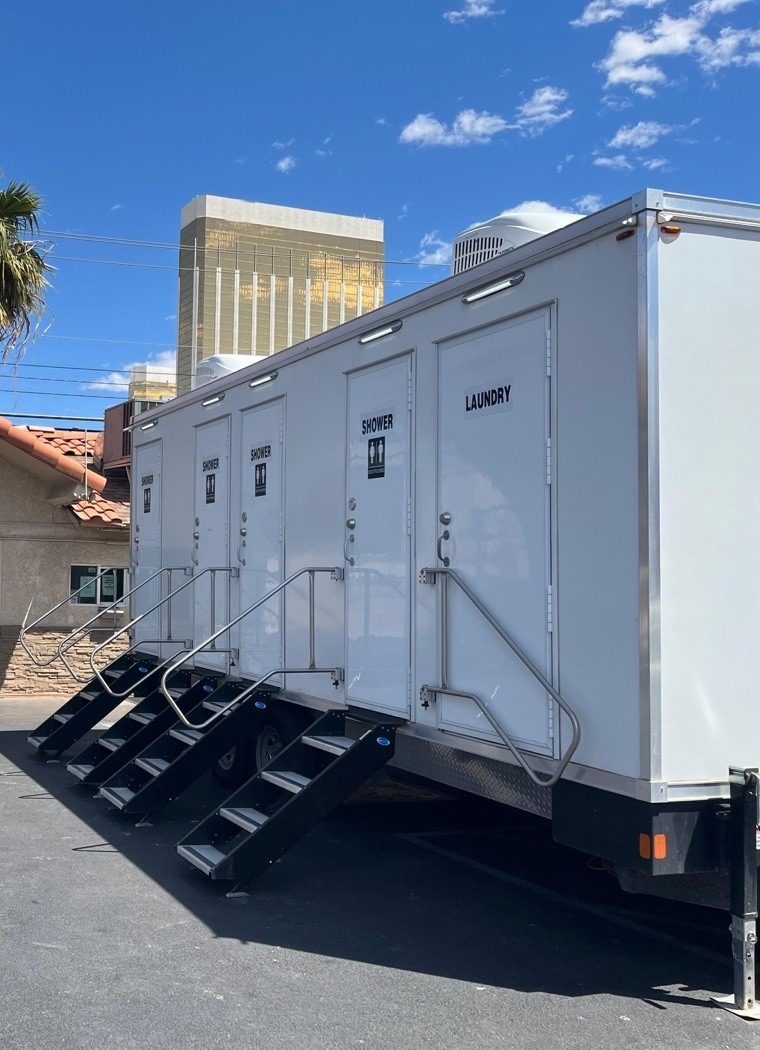
Events and base camp
Shower stalls paired with laundry or restroom rooms for multi day events, production base camps and temporary housing.
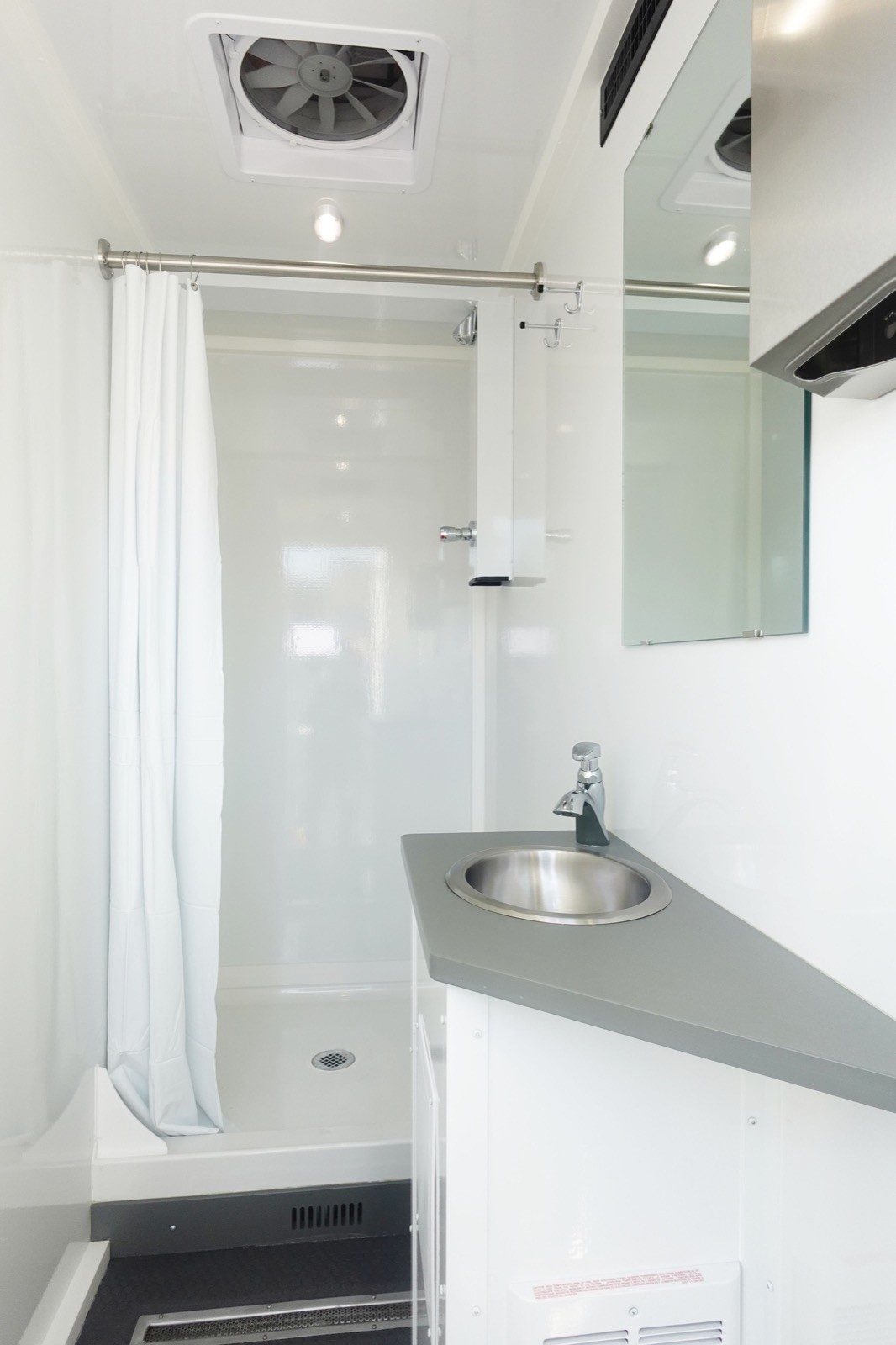
Inside every unit
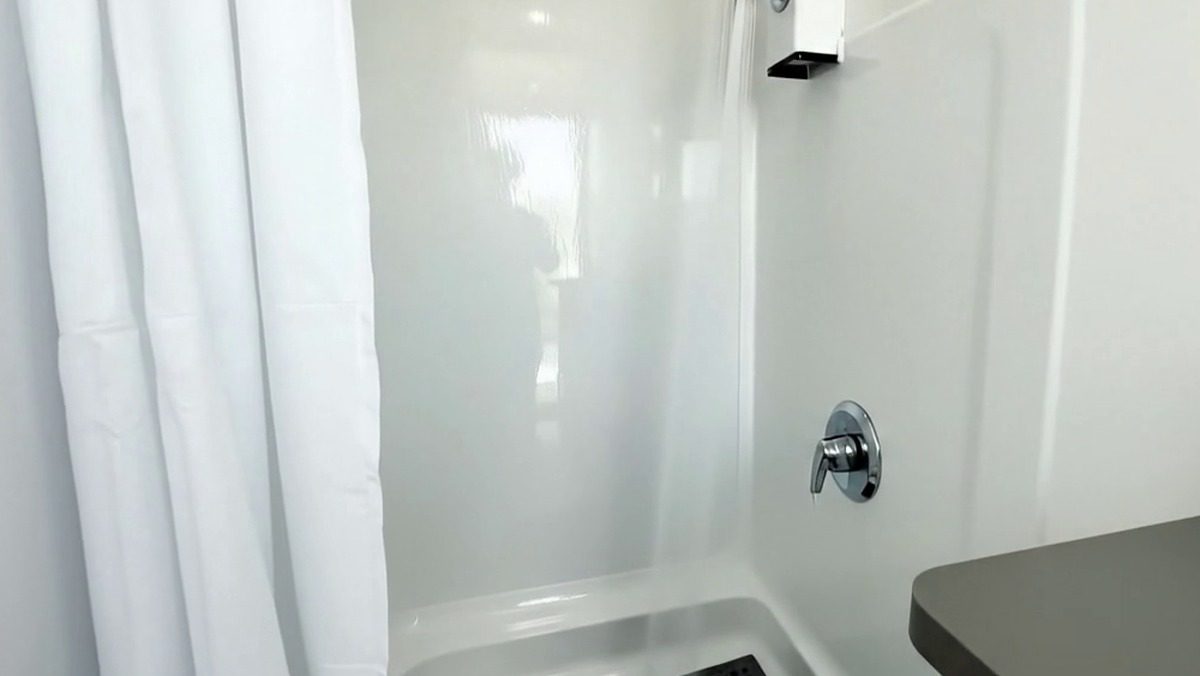
A door that latches, hot water that holds, sinks and mirrors, and lighting you can actually see yourself in.
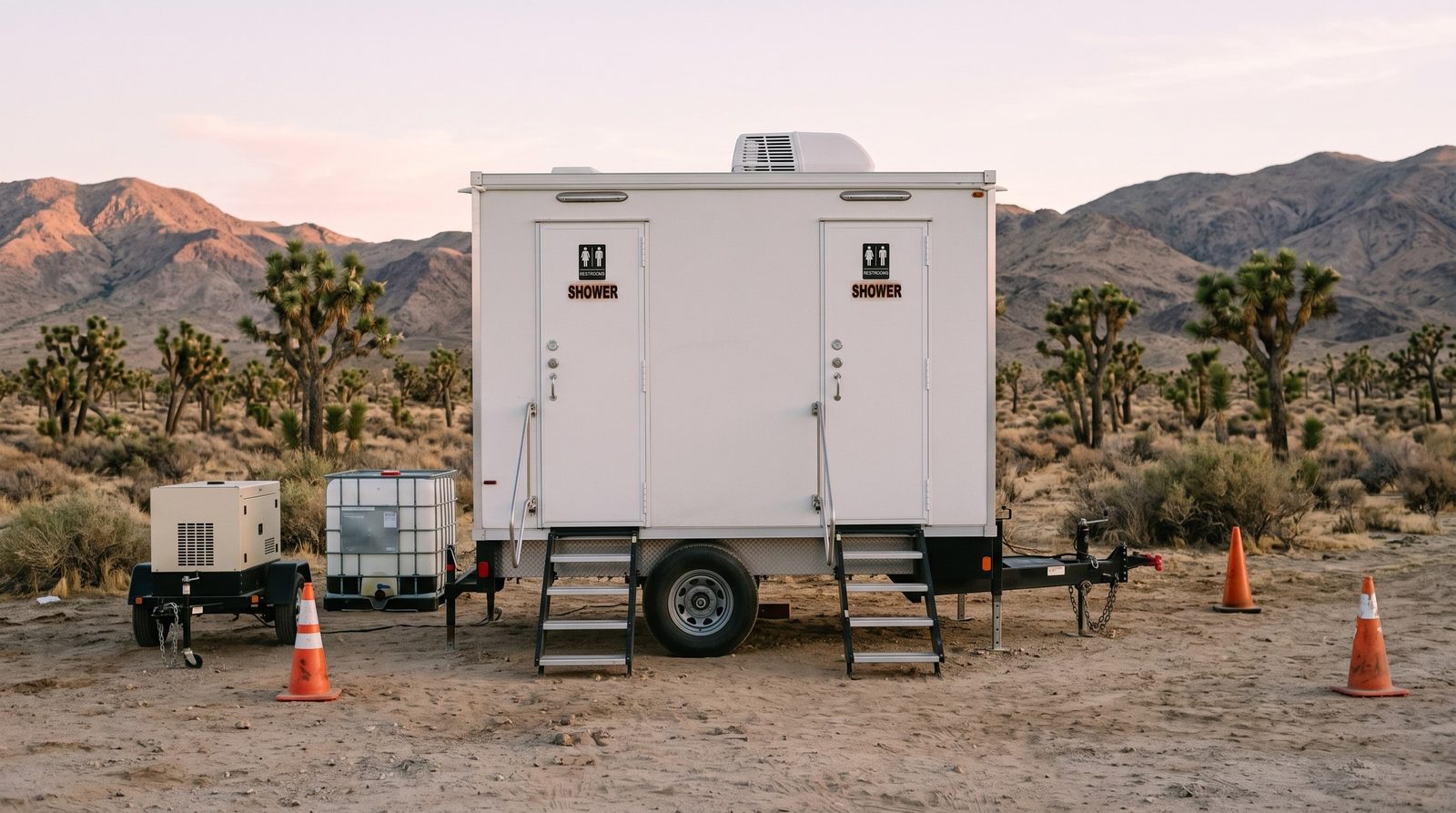
Off grid ready
Hauled fresh water, waste tanks and generator power when the site has nothing to plug into past Jean, Sloan or Indian Springs.
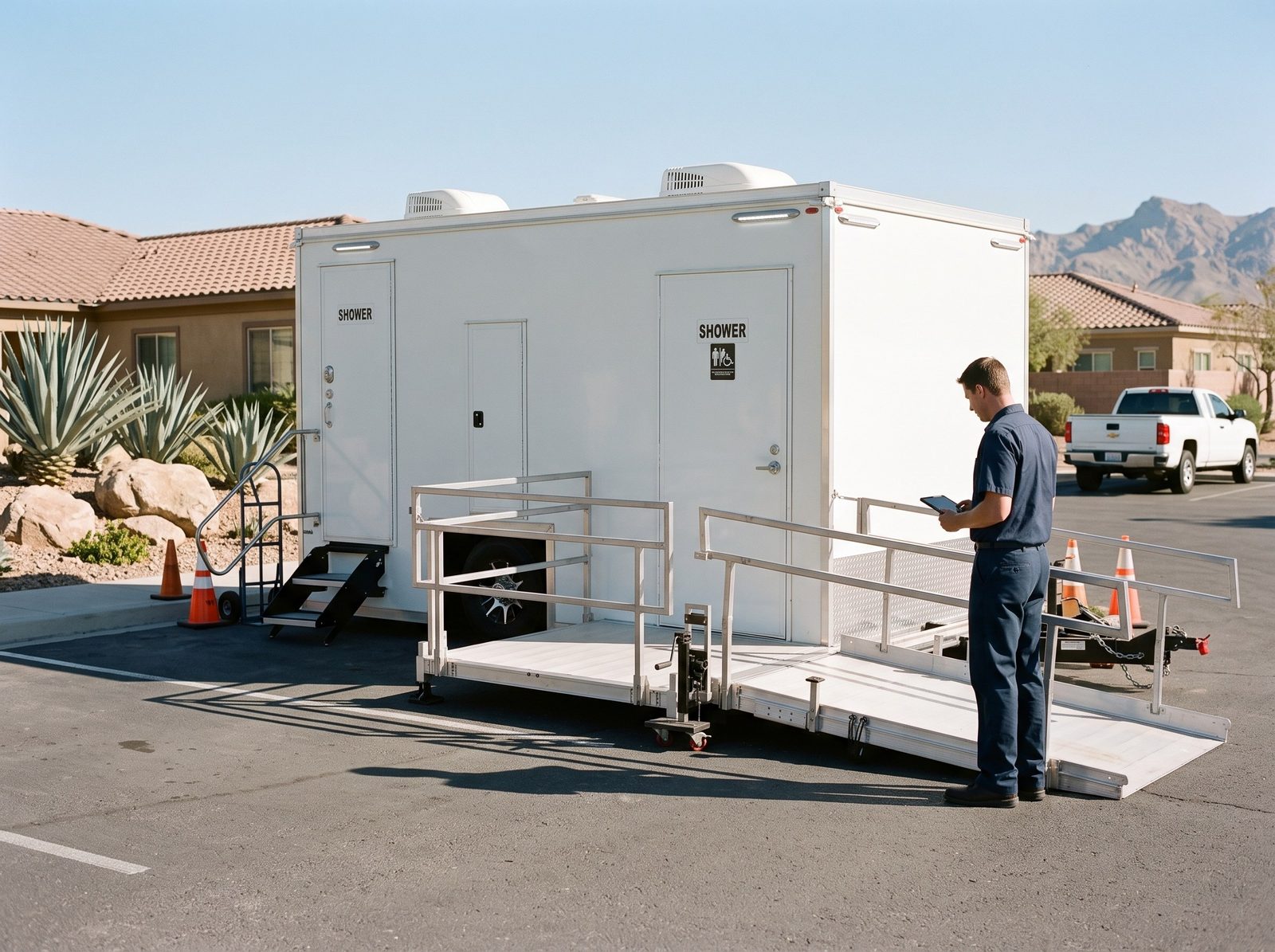
Ask early
The accessible unit sets a railed landing and ramp at its accessible door. Availability depends on your dates, so bring it up on the first call and we will hold it.
Photo gallery
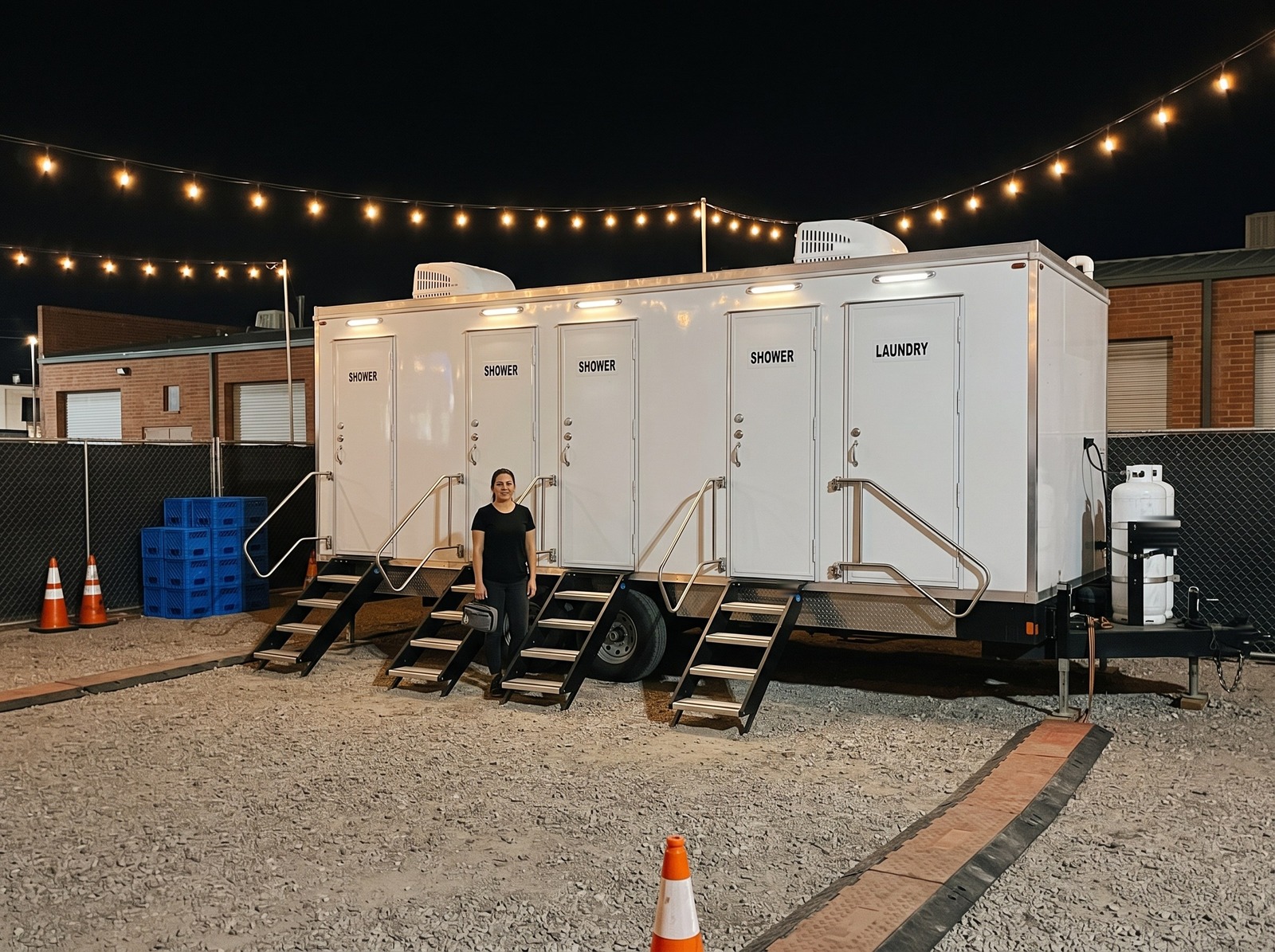
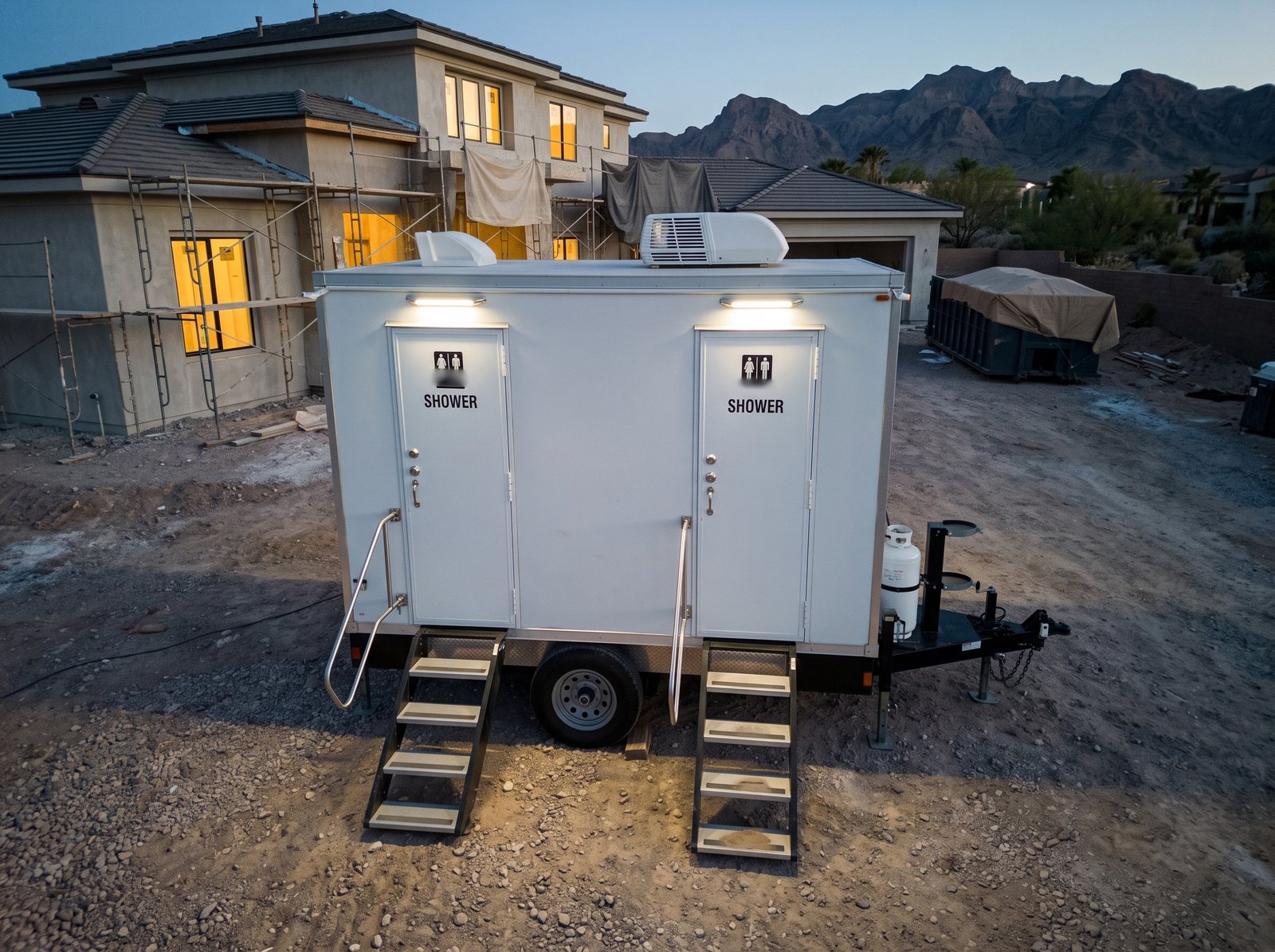
Four more looks at the units we send out: the combo lit up for a night event, every stall door open for a walk through, then a combo on a ranch lawn and a two station on a Henderson driveway.
Questions we get
Often same day or same week in the Las Vegas valley, depending on what is already committed. Northern Nevada and remote sites need a little more lead time for the haul. Availability moves around convention weeks and big race weekends, so call and ask rather than assuming.
Yes. The units are air conditioned and we spec them for desert work. Shade and a level pad help, and we will point out the best placement when we get there. The same units carry heat for winter nights at elevation.
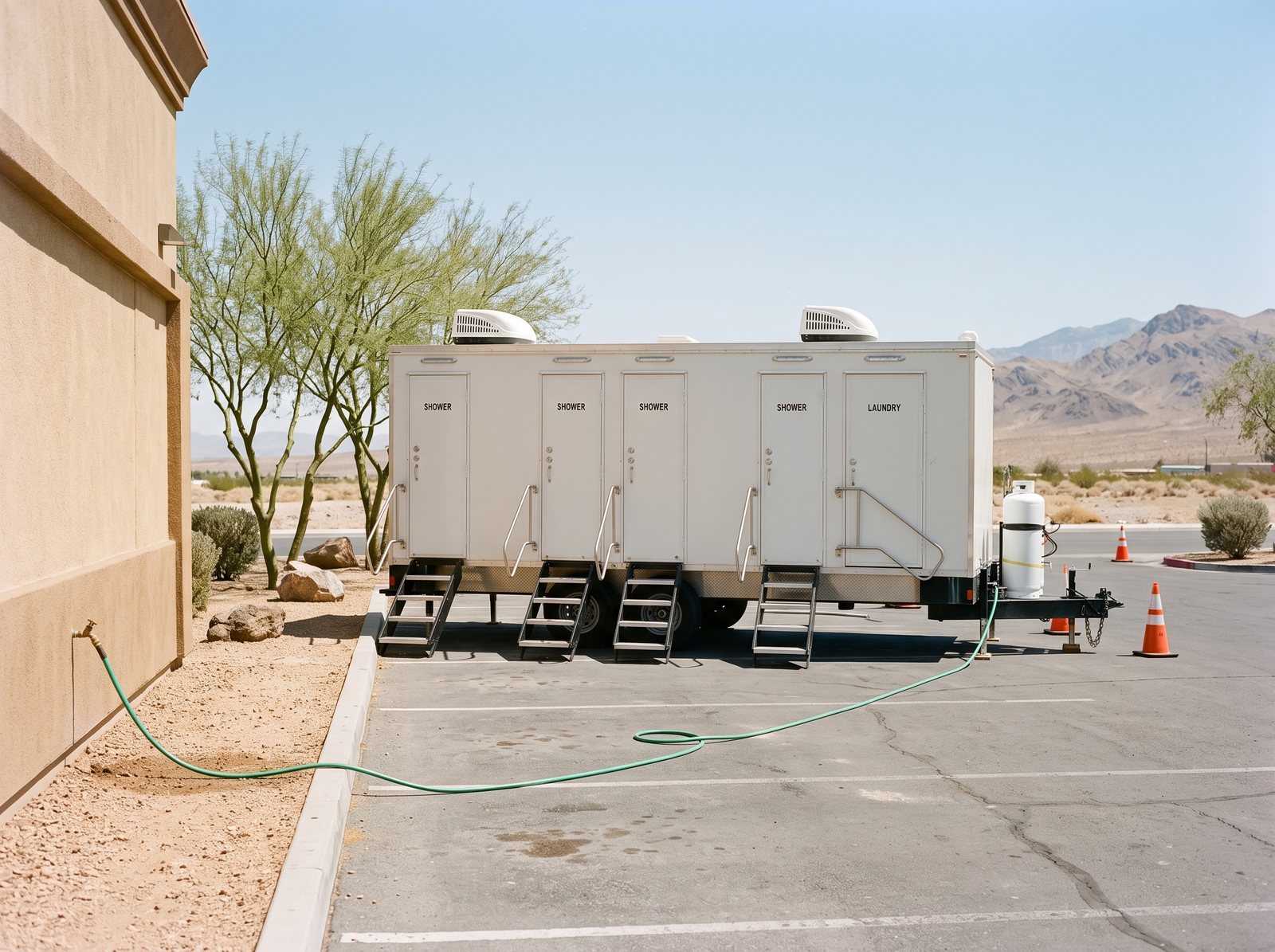
A reasonably level spot the truck can reach, plus power. Water and sewer connections make a long rental easier to service. When there is nothing on site at all we work it out with hauled fresh water, a generator and scheduled pumping.
We do, subject to availability for your dates. Bring it up on the first call, since accessible units book out faster than the standard ones.
The rough rule is one stall per eight to ten people when showers are spread across a shift change, and more if everybody hits it at once. Tell us your crew count and your schedule and we will size it with you.
That setup is ordinary for us. The trailer carries its own fresh and waste tanks, the generator provides the power, and fresh water is trucked in on a schedule matched to your headcount. What we need from you is an honest answer about the access road and whether a service truck can reach the unit where it will sit.
Into sealed tanks on the trailer, and out by licensed pump out to an approved disposal point. Both the shower side and the toilet side. Nothing goes on the ground. Nothing goes into a wash either, on any job, however remote the site is.
Yes, as a scheduled visit rather than a same day favor. It has to be disconnected, towed, releveled and reconnected at the new spot exactly as it was at the first. On corridor work where the crew moves in phases, we plan those moves in at booking.
It depends on the county and the event, and the permit belongs to the organizer rather than to us. In Clark County the health side of that permit runs through the Southern Nevada Health District special events program. What we can do is put in writing what the unit provides on water source, wastewater containment and handwashing, which is usually the part of the application that is actually about the trailer. A construction job site is a different track and sits under workplace sanitation rules instead.
A weekend or the length of a build. Long placements are normal and so is extending one, which happens on most long jobs. The only thing a long term placement changes is the service planning, and through a northern winter, the cold weather setup that goes on at delivery.
Get a quote
The quote form takes a few minutes and asks for the same things we would ask on the phone: where the trailer is going, when, for how long, how many people will use it and whether the site has power. Send it and the person covering Nevada calls you back. If you would rather talk it through, call (702) 960-1918, seven days a week.
Field notes
Four long reads, one for each kind of job the phone rings about most weeks.
Forty people off shift at once, nothing to plug into and no tap within twenty miles. Here is how that job gets built.
Where to park it so the line does not cross the beer garden, and how to keep it clean while the gates stay open.
The decisions an agency is better off making in March than at two in the morning during an evacuation.
Slope, gravel, turning room and the few feet by the door. Get these right and delivery day takes an hour.